Asynchronous Video Support vs. Synchronous: Which Drives Better Customer Satisfaction?

Learn the key differences between asynchronous and synchronous video support and discover which approach delivers better customer satisfaction, reduces resolution times, and cuts operational costs for your business.
Introduction
In today's digital-first customer service landscape, video has emerged as a powerful tool for resolving issues faster and more effectively. But when implementing video support, businesses face a critical choice: should they focus on synchronous (real-time) video calls or asynchronous (recorded) video messaging?
The answer impacts everything from customer satisfaction scores to operational costs and agent efficiency. This comprehensive guide examines both approaches, drawing from real implementation data to help you determine which video support strategy will best serve your customers and business objectives.
Understanding Video Support
Definition and Importance of Video Support in Customer Satisfaction
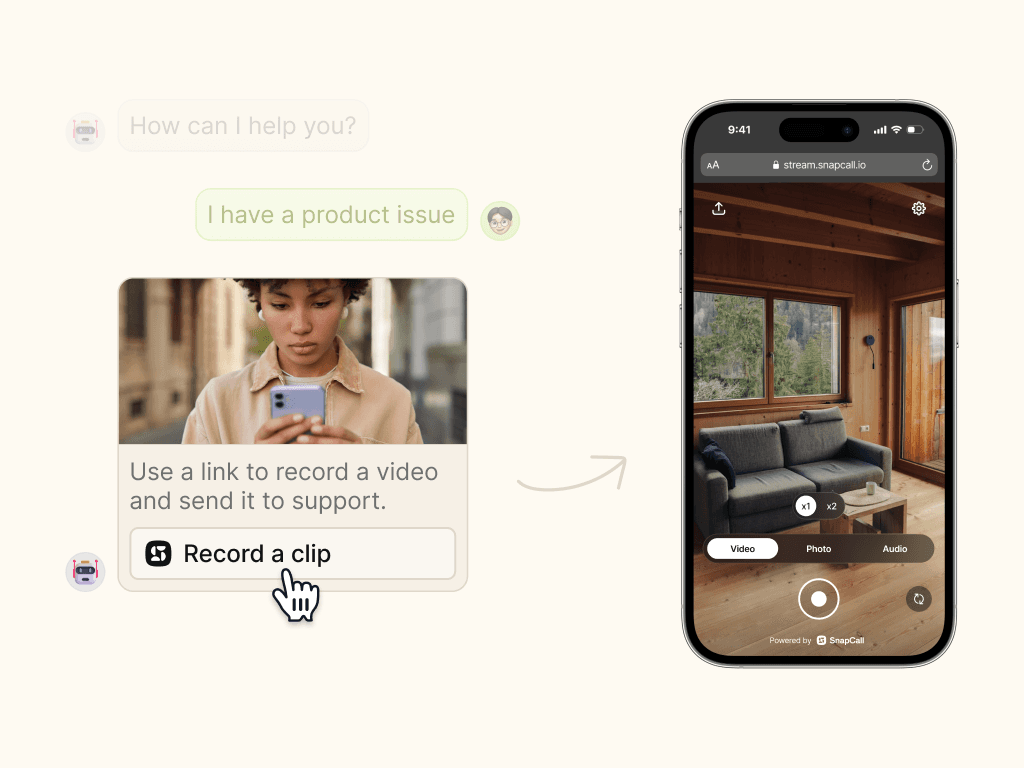
Video support is a customer support method that leverages video technology to deliver personalized and interactive assistance. This approach is crucial for customer satisfaction as it allows for timely and effective resolution of issues in a format that is easy to understand. Whether it’s resolving complex technical problems, providing product demonstrations, or offering tailored support, video support enhances the overall customer experience. By integrating video support, businesses can not only improve customer satisfaction but also reduce the volume of support tickets and foster greater customer loyalty.
Benefits of Using Video in Customer Support
Incorporating video into customer support offers several significant benefits:
Improved Customer Satisfaction: Video support provides a more personalized and interactive experience, which can lead to higher satisfaction rates among customers.
Reduced Support Tickets: By efficiently resolving complex issues through video, the number of support tickets can be significantly reduced, freeing up resources for other tasks.
Increased Customer Loyalty: Effective and personalized video support helps build trust and loyalty, encouraging customers to remain with the brand and even advocate for it.
Cost Savings: Video support can minimize the need for in-person assistance, leading to substantial time and cost savings for businesses.
What's the Difference? Understanding Synchronous vs. Asynchronous Video Support
Before diving into which approach drives better customer satisfaction, let's clarify what each term means:
Synchronous Video Support
Synchronous video support happens in real-time, similar to a video conference call. It involves:
Live video conversation between agent and customer
Immediate back-and-forth communication
Scheduled or on-demand sessions
Real-time problem solving and demonstration
As noted in SnapCall's documentation, synchronous support allows agents to "build trust by reading facial expressions and body language to foster genuine connections" and "easily demonstrate product issues and guide customers through solutions."
Asynchronous Video Communication Support
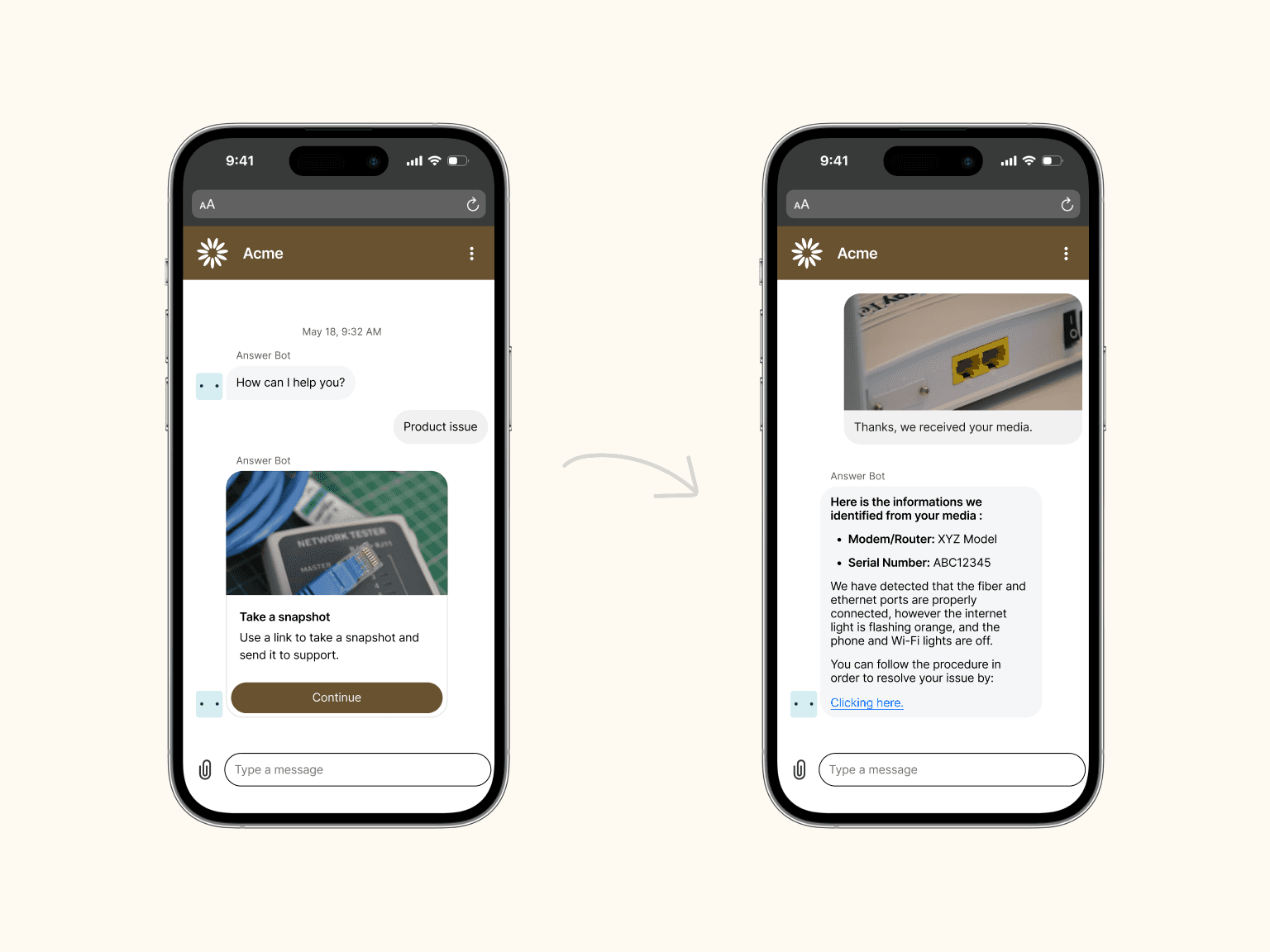
Asynchronous video support involves recorded video messages exchanged between customers and support teams. Async video enhances customer service by allowing for faster recording and efficient editing, enabling businesses to save time on re-recording and focus more on their customers. It features:
Customer-recorded videos showing product issues
Agent-recorded video responses with solutions
No need for simultaneous availability
Flexible viewing times for both parties
AI-powered analysis of video content
Asynchronous videos play a crucial role in modern team communication, enhancing productivity and accommodating different working styles. They alleviate challenges posed by synchronous meetings, such as Zoom fatigue and logistical concerns, making it easier for employees to communicate effectively without the stress of real-time interactions.
Asynchronous video “allows customers to upload videos at their convenience, making the support process smoother and more flexible,” according to implementation research at companies like Devialet.
The Case for Asynchronous Video Support
1. Convenience and Flexibility
Asynchronous video support shines when it comes to convenience. Customers can record videos of their issues whenever they have time, rather than scheduling appointments or waiting in queues. This flexibility allows for customer issue reporting outside of standard business hours, enhancing engagement and efficiency. This flexibility is particularly valuable for:
Customers in different time zones
Busy professionals who can’t commit to real-time calls
Issues that require demonstration but aren’t urgent
Documentation of intermittent problems
2. Significant Operational Efficiency Gains
The data shows impressive operational improvements with asynchronous video support:
Bob’s Discount Furniture reported a 32% decrease in resolution time after implementing asynchronous video clips
Meubles RD experienced a 33% increase in one-touch resolution using video clips and automation
Devialet achieved a remarkable 46% improvement in resolution time through asynchronous clips
Calculating the average resolution time involves dividing the total resolution time for all customer issues by the number of resolved tickets. This metric is crucial for improving customer satisfaction by effectively tracking time to resolution (TTR).
These efficiency gains stem from several factors:
Agents can handle multiple cases simultaneously rather than being tied to one call
Videos can be reviewed by the most appropriate specialist
Recorded evidence eliminates the need for repeat explanations
AI analysis automatically extracts key information from videos
3. Enhanced Issue Documentation
Asynchronous video creates a permanent visual record of issues, which serves multiple purposes:
Provides tamper-proof evidence for warranty claims
Allows for easy escalation to specialized teams
Creates a reference for similar issues in the future
Enables accurate assessment of product issues without requiring returns
Enhances documentation of customer interactions, leading to improved customer loyalty and satisfaction
Free PRO, an internet provider, found that asynchronous video clips helped them “minimize the need for on-site interventions” by allowing customers to record and share clips at their convenience.
Examples of Asynchronous Video Communication in Support Channels
Asynchronous video communication allows customers to receive support at their convenience, without the need for real-time interaction. Here are some practical examples:
Pre-recorded Video Tutorials: Businesses can create step-by-step video guides that help customers understand how to use their products or services effectively.
Video FAQs: Video FAQs can address common customer questions in a more engaging and understandable format.
Video Support Libraries: A collection of video tutorials and FAQs that customers can access anytime, providing a comprehensive resource for troubleshooting and learning.
The Case for Synchronous Video Support
1. Immediate Problem Resolution
Real-time video calls excel in situations requiring immediate resolution:
Complex technical issues needing back-and-forth communication
The type of support channel customers utilize can significantly influence the speed and effectiveness of issue resolution. For instance, live video chat often resolves issues faster than email.
High-value customers requiring premium support experiences
Scenarios where customers need immediate reassurance
Cases where troubleshooting requires real-time guidance
Human Connection and Trust Building in Customer Interactions
Synchronous video support creates stronger human connections through:
Face-to-face interaction that builds rapport
Real-time emotional reassurance for frustrated customers
Immediate clarification of misunderstandings
Personalized service that feels premium
3. Impressive Results for Specific Use Cases
While asynchronous video shows strong general performance, synchronous video calls demonstrate exceptional results in certain scenarios:
Rox Casino achieved an 80% faster onboarding process using video calls for identity verification
Cabify similarly reported 80% faster onboarding when using video calls for driver verification processes
Experienced a 37% cost reduction compared to telephony when implementing live audio and video calls
Which Approach Delivers Better Customer Satisfaction?
The Data on Customer Satisfaction
When it comes to CSAT scores, both approaches show positive impacts:
Devialet achieved a 90% CSAT score with asynchronous video support
Another client reported a 30% annual increase in CSAT using synchronous video calls
Bob’s Discount Furniture noted that video support (both types) resulted in “tremendous return on investment”
Effective communication between customer success teams and product teams can lead to faster query resolutions and better overall customer satisfaction.
However, the data suggests that the best approach depends on several key factors rather than one being universally superior.
Definition and Importance of Time to Resolution in Customer Satisfaction
Time to Resolution (TTR) is a critical customer service metric that measures the duration it takes to resolve a customer issue from the initial contact. TTR is vital for customer satisfaction as it directly impacts customer loyalty and retention. A lower TTR indicates that a business can resolve issues quickly and efficiently, leading to higher satisfaction rates. By focusing on reducing TTR, businesses can enhance customer satisfaction, foster loyalty, and decrease the number of support tickets, ultimately improving overall operational efficiency.
Decision Framework: Choosing the Right Approach
The optimal choice between synchronous and asynchronous video support depends on:
Industry and Use Case
Asynchronous excels for: Product issues, delivery verification, warranty claims, assembly problems
Synchronous excels for: Identity verification, complex troubleshooting, high-touch customer service
Issue Complexity
Simple to moderate issues: Asynchronous video often provides more efficient resolution
Complex issues: Synchronous video offers better interactive problem-solving
Customer Expectations
Self-service preference: Asynchronous video aligns with customers who prefer flexibility
White-glove service: Synchronous video delivers a more premium experience
Operational Considerations
Agent availability: Asynchronous requires fewer agents to handle the same volume. Methods like triage for categorizing tickets based on urgency and the use of AI chatbots to aid the support team by answering common queries can significantly enhance customer service efficiency.
Technical requirements: Synchronous requires reliable, high-quality connections on both ends
The Hybrid Approach: Best of Both Worlds
Many organizations are finding that a hybrid approach delivers the best overall customer satisfaction. This strategy involves:
Starting with asynchronous video for initial issue documentation
Escalating to synchronous video calls for complex situations
Using AI analysis to determine which issues need live intervention
Empowering customers to choose their preferred communication method
Service level agreements outline the expected standards for issue resolution times and are crucial in maintaining customer satisfaction by ensuring timely responses to issues.
Client demonstrates this approach well, supporting 50,000+ customers monthly through a mix of asynchronous video clips and live video calls, achieving a 15% improvement in resolution time.
Implementation Recommendations
For Companies New to Video Support: Building a Customer Support Team
If you’re just beginning your video support journey:
Start with asynchronous video for common, well-defined issues. Features like ease of recording and integration with customer service tools can significantly improve the effectiveness of support services.
Implement basic AI analysis capabilities to sort and categorize videos
Train your team on effective video communication techniques
Establish clear metrics to measure performance improvements
Gradually introduce synchronous video options for complex cases
For Companies Already Using One Approach
If you’re already using either synchronous or asynchronous video:
Analyze your current performance metrics by issue type. Equip your customer support team with tools to identify and address systemic issues, and use methods for analyzing recurring issues that aid in prioritizing tasks and improving overall efficiency in support operations.
Identify scenarios where the alternative approach might be beneficial
Run a pilot program with the new approach for specific use cases
Compare customer satisfaction scores between approaches
Develop clear guidelines for when to use each approach
Technology Considerations
Regardless of which approach you choose, certain technological requirements are essential:
Integration with your CRM: Zendesk, ServiceNow, Salesforce, Intercom
Secure data handling: Video storage and transmission must meet privacy standards
Mobile optimization: Solutions must work on customer mobile devices
AI capabilities: Video analysis speeds resolution and improves consistency
Ease of use: Both customers and agents need intuitive interfaces
Real-World Success Metrics
Companies implementing video support report impressive results:
46% efficiency improvement
11% reduction in average number of tickets (industry average)
5% time saved by agents (industry average)
42% decrease in resolution time
35% increase in one-touch resolution
Conclusion: The Future is Visual
Both synchronous and asynchronous video support drive significant improvements in customer satisfaction, but in different ways and for different scenarios. The data suggests that:
Asynchronous video typically delivers better operational efficiency and broader coverage
Synchronous video creates stronger customer connections and handles complexity better
A hybrid approach often delivers the best overall customer satisfaction
As visual communication continues to evolve, businesses that thoughtfully implement both approaches will be best positioned to meet diverse customer needs while optimizing operational efficiency.
FAQs About Video Support
Does video support actually improve resolution times?
Yes, data shows that video support can reduce resolution times by 32-46% compared to traditional channels, primarily because visual information eliminates back-and-forth communication needed to clarify issues. For example, Devialet achieved a 46% improvement in resolution time using asynchronous video clips, while Free PRO reported a 42% decrease in resolution time using a combination of clips and video calls.
Which industries benefit most from video support?
Video support shows strong results across multiple industries, including furniture retail (Bob's Discount Furniture), consumer electronics (Devialet), telecommunications (Free PRO), insurance claims processing, and identity verification services. Retail companies implementing video support have seen returns reduced by up to 32%, while insurance companies report faster claim verification and reduced fraud.
How does AI enhance video support?
AI analyzes video content to identify products, issues, and potential solutions. It can also extract key information like serial numbers, populate custom fields in your CRM, suggest knowledge base articles, and even generate response templates for agents. Companies using AI-powered video analysis report that agents can handle 11% more tickets on average, with some seeing agent efficiency increases of up to 30%.
What's the ROI of implementing video support?
Companies report significant ROI through reduced on-site visits, lower call volumes, faster resolution times, and increased first-contact resolution rates. Additional ROI comes from decreased telephony costs and reduced need for in-person technician visits for issues that can be resolved remotely.
How do customers respond to video support options?
Customer satisfaction scores typically increase with video support options. Companies reported a 90% CSAT score, and a 30% annual increase in CSAT after implementing video support. Customer feedback indicates they appreciate the visual clarity, faster resolutions, and flexibility of video support channels.
Is asynchronous video support better for reducing support costs than synchronous?
Asynchronous video support generally shows more significant cost reduction benefits because it allows agents to handle multiple cases simultaneously and leverages AI for automated analysis. Companies implementing asynchronous video report operational cost reductions of 15-40%, while still maintaining high customer satisfaction. For example, Meubles RD saw a 33% increase in one-touch resolution after implementing asynchronous video clips.
How does video support integration work with existing customer service platforms?
Video support solutions like SnapCall integrate seamlessly with major CRM platforms including Zendesk, ServiceNow, Salesforce, Intercom, and LiveChat. The integration allows video interactions to be automatically attached to customer tickets, with AI-generated summaries and suggested responses appearing directly in the agent workflow. This one-click integration ensures minimal disruption to existing processes while enhancing capabilities.
What types of product issues are best resolved with video support?
Video support excels at resolving visual product issues including:
Product assembly problems (furniture, electronics)
Technical malfunctions that have visible symptoms
Physical damage verification for warranty claims
Software interface issues that can be demonstrated
Installation guidance for complex products
Delivery condition verification for disputed shipments
How does video support compare to traditional phone support for complex issues?
Video support outperforms phone support for complex issues by providing visual context that eliminates miscommunication. While phone calls rely solely on verbal descriptions (missing 80% of non-verbal communication), video allows agents to see the actual problem, demonstrate solutions, and confirm proper implementation. Synchronous communication, such as video conferencing and face-to-face conversations, is crucial for real-time interaction, making it highly relevant in these contexts. Companies implementing video for complex support issues report resolution time improvements of 35-46% compared to phone support.
What technical requirements do customers need for video support?
For asynchronous video support, customers need:
A smartphone with a camera or a computer with webcam
Basic internet connection (even mobile data is sufficient)
No special software installation required
For synchronous video calls, requirements include:
Slightly stronger internet connection (1.5 Mbps minimum)
A device with camera and microphone
Few minutes of uninterrupted time
Modern video support platforms are designed to work across devices and with minimal bandwidth requirements to ensure accessibility for all customers.
How do you train customer service agents to effectively use video support?
Effective agent training for video support includes:
Technical platform familiarization (typically takes less than 30 minutes)
Visual communication skills development
Guidelines for interpreting customer videos
Protocols for recording clear solution demonstrations
Training on AI-assisted tools for video analysis
Practice scenarios for common industry-specific issues
Most companies report that agents become proficient with video support tools within 1-2 days, with performance continuing to improve over subsequent weeks.
How does video support handle customer privacy concerns?
Modern video support solutions address privacy concerns through:
Secure, encrypted video transmission and storage
Clear customer consent processes before video recording
Options for customers to review videos before submission
Automatic detection and blurring of sensitive information
Compliance with GDPR and other privacy regulations
Strict data retention policies
No customer information is shared with third parties, and all video data is handled according to the same security standards as other customer data.
Can video support be used for proactive customer outreach?
Yes, proactive video support is an emerging trend with strong results. Companies are using asynchronous video messages for:
Product setup guidance before customers encounter issues
Warranty registration assistance
New feature demonstrations
Maintenance reminders with visual instructions
Personalized thank you messages from support teams
These proactive approaches show promise for reducing support ticket volume by addressing common issues before they occur.
How does video support impact first contact resolution rates?
Video support significantly improves first contact resolution (FCR) rates. Companies implementing video support report FCR improvements of 33-35%, meaning more issues are solved in the first interaction without follow-ups. This improvement stems from the enhanced visual context that helps agents accurately diagnose issues immediately and provide verified solutions.
What metrics should companies track to measure video support success?
Key performance indicators for video support include:
Resolution time (average decrease of 32-46%)
First contact resolution rate (increases of 33-35%)
Customer satisfaction scores (CSAT improvements of 9-30%)
Number of on-site visits required (decreases of 32-36%)
Agent efficiency (handling 5-15% more tickets)
Cost per resolution (typically decreases by 15-40%)
Video adoption rate by customers
AI suggestion acceptance rate by agents
Tracking these metrics provides a comprehensive view of video support's impact on both operational efficiency and customer experience.
How does visual communication improve understanding in customer support?
Research indicates that 80% of communication is non-verbal, which traditional support channels miss entirely. Video support captures this crucial visual component, allowing:
Customers to show exactly what they're experiencing
Agents to see facial expressions indicating confusion or understanding
Clear visual demonstration of solutions that would be difficult to explain verbally
Confirmation of proper implementation through visual verification
This comprehensive communication leads to fewer misunderstandings and faster resolutions.
Is video support suitable for all types of customers?
While video support shows high effectiveness across demographics, adoption strategies should consider:
Age demographics (younger customers typically adopt faster, but older customers often appreciate the visual clarity once introduced)
Technical comfort levels (simple one-click interfaces increase adoption)
Industry context (B2C retail customers have different expectations than B2B industrial clients)
Privacy preferences (always offering alternative channels for those who prefer them)
Companies like Devialet and Bob's Discount Furniture report 70-90% customer adoption rates when video support is properly implemented and explained.
How does asynchronous video support improve customer convenience?
Asynchronous video support enhances customer convenience through:
24/7 issue reporting without waiting for agents
Flexibility to record issues when they occur, not when support is available
No scheduling requirements or hold times
Option to record multiple attempts or examples at their own pace
Reduced need to take time off work for on-site technician visits
Ability to record issues in their native environment where they occur
This convenience factor is a major driver of the high customer satisfaction scores reported by companies implementing asynchronous video support.